
Hydrogen
The lightest fuel for the heaviest loads
Just 5.6 kg of Hydrogen can power a Hydrogen Fuel cell (HFC) car for 640 Km. The equivalent petrol or diesel cars need approximately 50 kg of fuel and a battery car needs 500 Kg of Lithium / Cobalt batteries to travel the same distance.



Applications
In automotive applications saving weight is critical and the superior energy density and low weight of Hydrogen is a fundamental advantage.
A vital economic factor in the UK is our fuel duty tax which nets the government £28.4 Billion per year for road building and public services. This would be lost completely if we all drove battery powered vehicles!
This fact makes the already environmentally damaging battery option a non starter from an economic stance.
Our Green Hydrogen
Currently the average cost diesel in the UK is over £7.60 per gallon/£1.68 per litre, assuming an optimistic 50 MPG average, diesel fuel still costs over 15 pence per mile and its set to keep rising.
Our green hydrogen RRP is £6.50 per Kg, so it costs just £47.60 to fill the 5.6Kg tank (in under 4 minutes) giving over 400 miles/640 Km range, this equals 11.9 pence per mile… “25% cheaper than diesel!
The bottom line is green hydrogen fuel is cheaper and cleaner than fossil fuels and it allows the government to balance the economic books and avoids the multi £Billion expense of upgrading the national grid, building millions of charging stations and the environmental issues of lithium/cobalt/nickel mining, battery manufacture and end of life disposal.
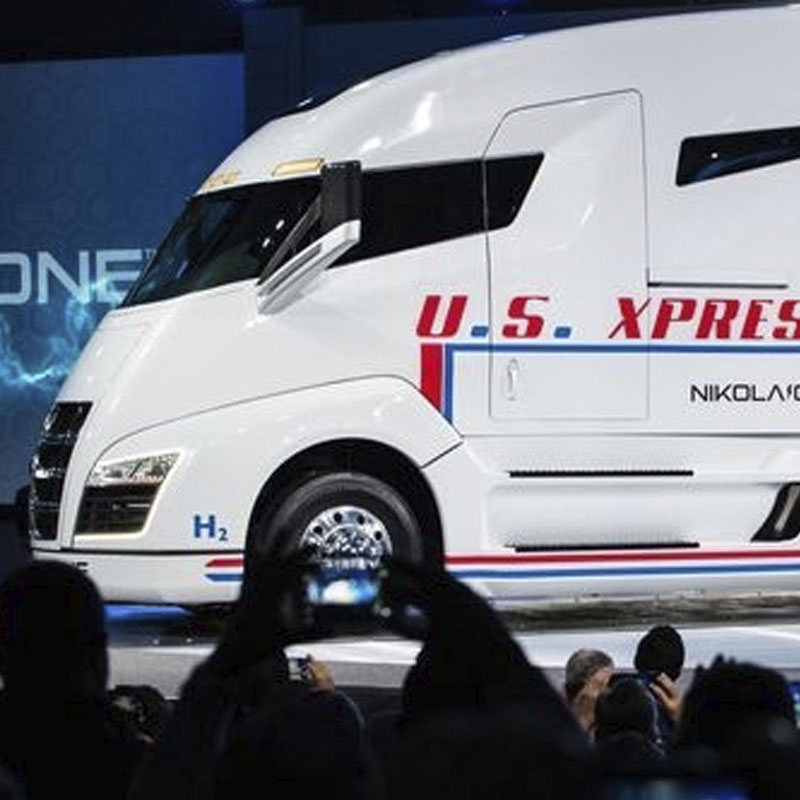



From the customers perspective Hydrogen refuelling is convenient and fast (under 4 minutes) and each fill gives over 400 miles / 640 Km range even in freezing weather. Existing petrol stations can easily add hydrogen pumps to their forecourts to complement new hydrogen refuelling stations enabling rapid and efficient nationwide rollout by 2030.

Power without Pollution
True zero carbon, zero toxins & zero particulate fuel emissions are only
possible with green hydrogen based fuels.

Hyundai Nexo – Hydrogen Fuel Cell
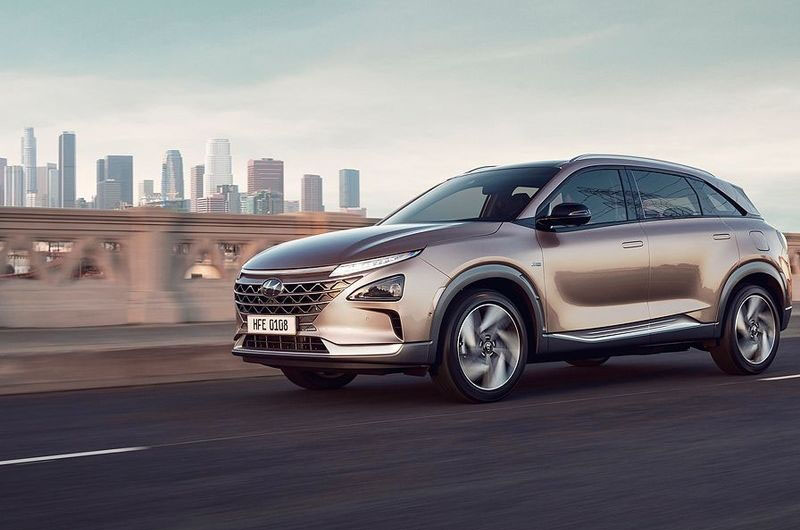
Hydrogen Fuel Cell Vehicles (HFCV) offer 640 Km range, 5 minutes refuelling for cars and 10 minutes for HGV’s and busses. HFCV have double the working life of lithium batteries and no end of life disposal issues. HFC are 100% recyclable, use no toxic chemicals and are safe to handle at all stages of the process.

Lord Bamford, founder of JCB, launches their new Hydrogen fuel powered ICE engine.
JCB’S £100 million project to produce super-efficient hydrogen engines has been given its international debut at one of the world’s biggest construction equipment fairs.
A team of 150 engineers is working on the pioneering initiative to develop hydrogen combustion engines – and more than 50 prototypes have already been manufactured at JCB’s UK engine plant.
Prototype JCB hydrogen engines are already powering backhoe loader and Loadall telescopic handler machines. JCB has also made a major breakthrough in proving the wider appeal of hydrogen combustion technology by installing one of the super-efficient hydrogen engines into a 7.5 tonne Mercedes truck – a retrofit which was completed in just days. JCB has also unveiled its very own designed and built mobile refuelling bowser to take the fuel to the machines. The bowser has enough hydrogen gas to fill 16 hydrogen backhoe loaders and is able to be transported either on the back of a modified JCB Fastrac tractor or on a trailer.

This is a complete revolution of the ICE engine and electrical generator sector… Meet the new Ford!
Hydrogen powered ICE engine
Ford is at the forefront of researching the viability of hydrogen as an onboard power source for its renowned E-Transit vehicle.
This initiative aims to determine whether hydrogen fuel cell technology can provide extended zero-emission mileage for E-Transit users engaged in heavy-duty operations, covering substantial distances, carrying maximum loads, and utilizing auxiliary equipment like refrigeration units, all while facing limited opportunities for recharging during their work shifts.
With partial funding from the Advanced Propulsion Centre (APC), Ford collaborates with a consortium comprising six prominent automotive technology leaders and fleet operators to assess the necessary hydrogen refueling infrastructure.
Ford Pro, the commercial vehicle (CV) and services division of the company, will leverage this pilot program to enhance its conversion capabilities. It will receive support from engineers and E-Transit specialists located at Dagenham and the Dunton Technical Centre in Essex.
Tim Slatter, Chair of Ford in Britain, expressed that Ford envisions fuel cells primarily benefiting its largest, heaviest commercial vehicles, ensuring they operate with zero emissions while meeting the demanding daily energy requirements of our valued customers.

Toyota’s new hydrogen powered luxury sports saloon
Toyota’s new hydrogen powered luxury sports saloon the “Mirai” travels around 450 miles on just 6.3Kg of hydrogen. At just £7.80 (£6.50 plus 20% VAT) per Kg it costs just £49.14 to fill the tank, in under 4 minutes!
This equals 10.9 pence per mile fuel costs which is 22% cheaper than the equivalent Mercedes, BMW Range Rover and Jaguar diesel sports saloons 14 pence per mile, even assuming an optimistic 45 MPG for the big diesel powered cars.
Toyota reveals four new 2023/2024 Hydrogen fuel cell cars.
There is mounting concern regarding the human and environmental costs of mining lithium, cobalt and rare earth metals for batteries, with an increasing number of major pollution incidents being reported.
https://www.instituteforenergyresearch.org/renewable/the-environmental-impact-of-lithium-batteries/
Recycling used batteries generates high pollution, consumes a lot of water and is very expensive and generates mountains of waste.
https://www.bbc.com/future/article/20220105-lithium-batteries-big-unanswered-question
More on this important issue here.
https://www.wired.co.uk/article/lithium-batteries-environment-impact
“ROI from Green Hydrogen returns £1.00 to the economy for every 18 pence invested” Councillor Phillip Bell – Aberdeen Council.

Hydrogen on the high seas
“Green hydrogen and green hydrogen-derived ammonia are the only scalable fuels that can achieve the emission reduction targets set forth in the Paris Agreement.” This is the dramatic conclusion in the latest 2022 UMAS report.
https://www.offshore-energy.biz/green-hydrogen-based-fuels-are-the-best-option-for-shippings-green-transition-report-finds/
“New solid state hydrogen storage breakthrough reduces the costs, improves logistics and resolves safety issues with on board and dockside bunkering of hydrogen shipping fuel.” July 2022 – Maritime Executive.
https://maritime-executive.com/article/first-solid-form-hydrogen-propulsion-demo-vessel-ordered-for-amsterdam
World-leading civil and electrical engineering group, ABB shipping propulsion director states -“Hydrogen fuel cells are relatively easy to connect with current marine drive systems, they are highly scalable and as modern marine drives are already electric, we only need to exchange the power plant”
https://new.abb.com/news/detail/21291/the-future-fuel-picture-more-than-just-hydrogen
“The Canadian Navy has had fuel cells in their submarines since 1993″ This fact alone demystifies hydrogen as high risk – the last place you want a dangerous fuel is on board is in a steel tube hundreds of meters under the sea.
https://new.abb.com/news/detail/7658/hydrogen-on-the-high-seas-welcome-aboard